
Almost every dog eats grass at some point, and almost every dog owner has wondered what on earth is going on. The explanations that circulate — they're sick, they need to vomit, they're missing something in their diet — are all partially true and none of them is the complete picture. The honest answer is that grass eating in dogs is probably not one behaviour with one cause. It's several different behaviours that look identical from the outside.
The vomiting theory: true but overstated
The most common explanation is that dogs eat grass to make themselves vomit when they feel nauseous. This happens, but less often than people think. Studies of grass-eating behaviour in dogs found that the majority — somewhere around 75–80% — don't vomit after eating grass. If grass eating were primarily a self-medication strategy for nausea, you'd expect vomiting to follow much more consistently.
What does seem true is that some dogs, some of the time, eat grass when they feel unwell and vomit as a result. The frantic, gulping grass consumption — where a dog seems almost compelled to eat as much as possible as quickly as possible — is more likely to be associated with nausea and subsequent vomiting than the relaxed, selective grazing that most grass eating looks like.
If your dog eats grass quickly, in large quantities, with obvious urgency, and then vomits — that's the nausea pattern. If they wander the garden casually nibbling at specific blades as part of a normal outdoor session, something else is going on.
Instinct and opportunism
Dogs are omnivores descended from wolves, who regularly consumed the stomach contents of their herbivore prey — which included partially digested plant material. Plant matter, including grass, is not foreign to canine biology. The instinct to eat it occasionally may simply be a vestige of this dietary history rather than a signal of anything being wrong.
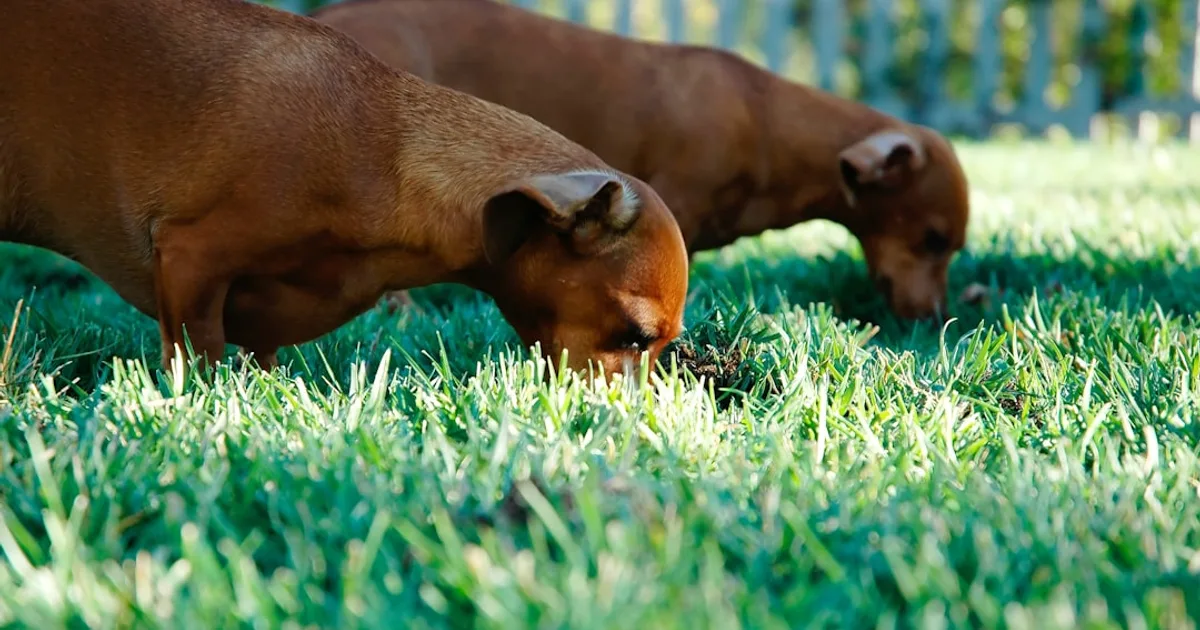
Dogs also eat grass because it's there and it's interesting. Texture, smell, the taste of specific grass types — these are sensory experiences, and dogs explore their environment orally in a way humans don't. A dog sniffing and nibbling at grass in the garden is not necessarily in distress or deficient in anything. They may just find it mildly interesting in the way that dogs find many things mildly interesting.
Boredom is a genuine factor for some dogs. A dog that has been insufficiently stimulated mentally and physically will engage in a variety of behaviours that seem odd to owners — grass eating among them — which is one reason matching breed to lifestyle matters more than size alone. If grass eating increases when exercise or engagement decreases, boredom is the likely driver.
Diet deficiencies: the limited case
The dietary deficiency theory — that dogs eat grass because they're missing fibre, certain minerals, or specific nutrients — is plausible but poorly supported by evidence. Dogs on high-quality complete diets eat grass at similar rates to dogs on lower-quality diets. There isn't strong evidence that adding fibre or specific supplements reduces grass eating.
That said, some individual dogs do seem to eat less grass after dietary changes, and if a dog is eating grass very frequently and compulsively, it's worth discussing diet with a vet — the same careful attention you'd give to what a cat eats beyond dry kibble alone. Increasing dietary fibre — through a different food or adding plain cooked pumpkin or sweet potato to meals — is low risk and occasionally helpful.
The clearest dietary connection is dogs eating grass after a prolonged fast or on an empty stomach. Early morning grass eating, before the first meal of the day, is often associated with acid reflux and stomach discomfort from accumulated bile. This is different from mid-activity grass nibbling. If it's happening consistently first thing in the morning, feeding a small amount before bed can reduce it.
When to pay attention
Occasional grass eating in an otherwise healthy, active dog who vomits rarely and seems well is almost certainly nothing to worry about. It's one of those dog behaviours that concerns owners more than it should.
Pay attention when: the grass eating is new and sudden in a dog that didn't used to do it, when it's accompanied by obvious signs of nausea or distress, when vomiting follows most grass eating sessions, when the dog is eating other non-food items alongside grass, or when there's any change in energy, appetite, or stool quality at the same time.
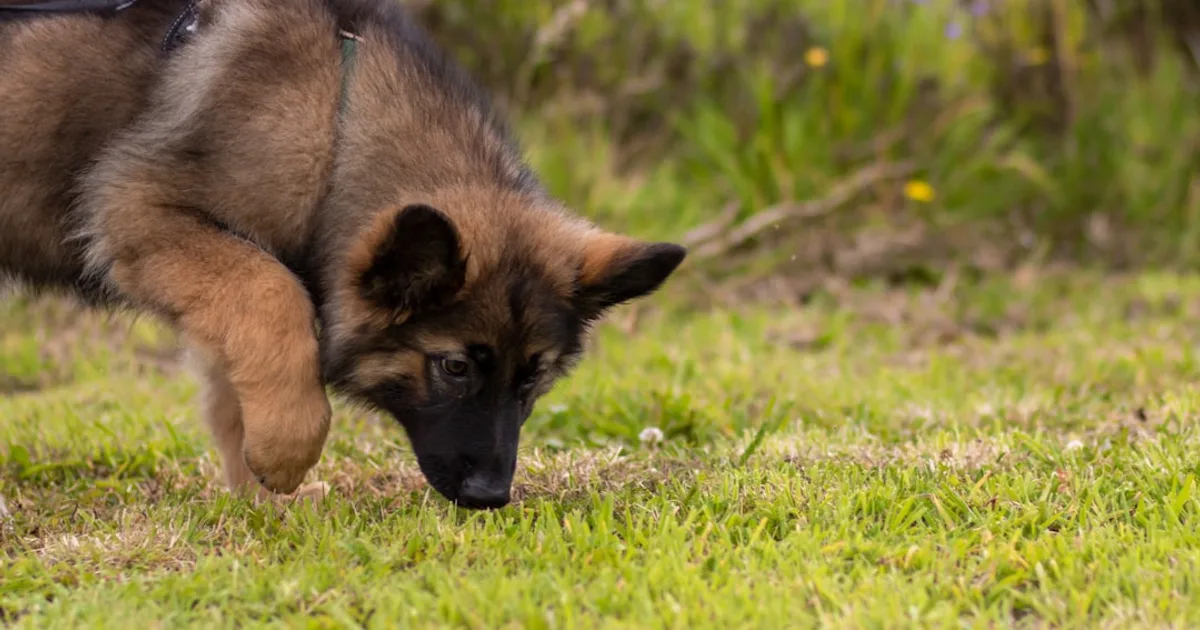
A dog that suddenly starts eating grass compulsively and seems unwell needs a vet visit. Grass eating combined with a bloated abdomen, restlessness, and unproductive retching is a potential emergency — these can be signs of bloat (gastric dilatation-volvulus) in larger breeds, which requires immediate veterinary attention.
The pesticide and herbicide problem
The main practical concern with grass eating isn't the grass itself — it's what's on it. Lawn treatments, weed killers, and pesticides are genuinely harmful to dogs, and many parks and gardens use them regularly. A dog eating grass on an unfamiliar lawn or in a public park has no way of knowing whether it's been treated.
Signs that a dog has ingested something toxic from treated grass: drooling, pawing at the mouth, vomiting, lethargy, tremors, or any sudden change in behaviour after grass eating in an unfamiliar location. If any of these appear after grass eating outside your own untreated garden, contact a vet.
At home, if you want to let your dog eat grass safely, simply stop using lawn treatments — many owners switch to home composting and natural yard care instead of chemical lawn products. Most grasses don't need chemical help to grow well, and an untreated lawn is safer for a dog that grazes.
What to do
For typical relaxed grass eating in a healthy dog: nothing. It's normal behaviour and intervening every time adds unnecessary stress for both of you.
If it's compulsive or frequent: review diet and exercise levels first. Ensure the dog is getting adequate mental and physical stimulation — and, in multi-pet homes, check whether a rushed pet introduction is adding background stress. Consider a vet conversation if nothing obvious explains it.
If the dog is eating grass and vomiting regularly: keep a note of when it happens — time of day, what they ate before, how urgently they ate the grass, what the vomit looked like. A vet can use this information to identify whether there's an underlying gastrointestinal issue worth investigating.
If it happens in unfamiliar locations — a weekend trip to a new park, for example — redirect rather than correct. A "leave it" command is useful here not because grass eating is inherently dangerous but because you can't know the chemical history of grass you didn't grow.
The dog eating grass in your garden on a Tuesday afternoon is almost certainly fine. The behaviour has been observed in domestic dogs, wolves, and wild canids throughout recorded history. It is not a crisis. It is, mostly, just a dog being a dog.