Most people who want to compost don't start because they're worried about doing it wrong. They've read about carbon-to-nitrogen ratios and turning schedules and activators and hot composting versus cold composting, and what should be a simple, natural process has been made to sound like a chemistry experiment.
Here's the honest version: compost happens whether you do it right or not. Organic matter breaks down. That's what it does. Your job is to create conditions that make it break down faster and produce better-quality compost. You don't need to be precise about it. You need to get the basics right and leave it alone most of the time.
What composting actually is
A compost heap is a managed ecosystem. Bacteria, fungi, worms, and other organisms break down organic matter into humus — a dark, crumbly, nutrient-rich material that improves soil structure, feeds plants, and retains moisture. The organisms doing this work need the same things most living things need: food, water, and air.
Your inputs provide the food. Turning or aerating the heap provides air. Rain and kitchen scraps provide moisture. Get those three things roughly right and the process looks after itself.
Setting up
You need a container or a dedicated space. The options range from a simple wire cage to a wooden slatted bin to a plastic council-issue compost bin to a sophisticated dual-chamber system. For most home gardens, a basic wooden or plastic bin about 1 metre square is ideal. It's large enough to generate the heat that speeds decomposition, small enough to manage easily, and doesn't cost much.
Position matters. A partly shaded spot is better than full sun — a heap in direct sun dries out too quickly in summer. Full shade stays too cold and wet. Somewhere that gets morning sun and afternoon shade is ideal. Putting the bin directly on soil rather than on concrete or paving allows worms and other organisms to move in from below, which accelerates decomposition significantly.
You don't need a bin at all. A simple heap in a corner of the garden will compost perfectly well, just more slowly and less tidily. If aesthetics matter, a bin. If they don't, a heap works.
The green and brown balance
This is the one principle that genuinely matters, and it's simpler than it sounds.
Compost ingredients fall into two categories. Greens are nitrogen-rich, moisture-rich materials: vegetable and fruit scraps, coffee grounds, fresh grass clippings, fresh plant prunings, tea bags (plain paper ones, not plastic-sealed). Browns are carbon-rich, dry materials: cardboard, paper, dry leaves, straw, wood chip, paper bags, egg boxes, toilet roll tubes.
A heap made entirely of greens becomes a wet, slimy, smelly mess. Too much nitrogen with insufficient carbon and the heap turns anaerobic — it rots without air, which produces that unpleasant smell and doesn't produce good compost. A heap made entirely of browns breaks down very slowly because there isn't enough nitrogen to fuel the microbial activity.
The right balance is roughly equal volumes of green and brown, loosely measured. Don't overthink this. Add a layer of cardboard or dry leaves every time you add a bucket of kitchen scraps. That's it.
What to add
Compostable: vegetable peelings and scraps, fruit waste, coffee grounds and paper filters, tea leaves and paper tea bags, eggshells, fresh garden clippings, dead plants and spent bedding plants, fallen leaves, cardboard (torn up, not in large pieces), newspaper (scrunched), paper bags, hair and nail clippings, wood ash in small amounts — including spent rose prunings if you're maintaining a companion-planted rose bed. Kitchen scraps you'd otherwise throw away are also the kind of waste that grocery budgets generate every week — composting turns that into free soil amendment.
Add with caution: grass clippings in large quantities — they mat together and go slimy. Add them in thin layers mixed with browns, or leave them to dry slightly first. Cooked food — technically compostable but attracts rats. If you have a rodent-proof bin, small amounts are fine. If your bin has open gaps at the bottom, avoid it.
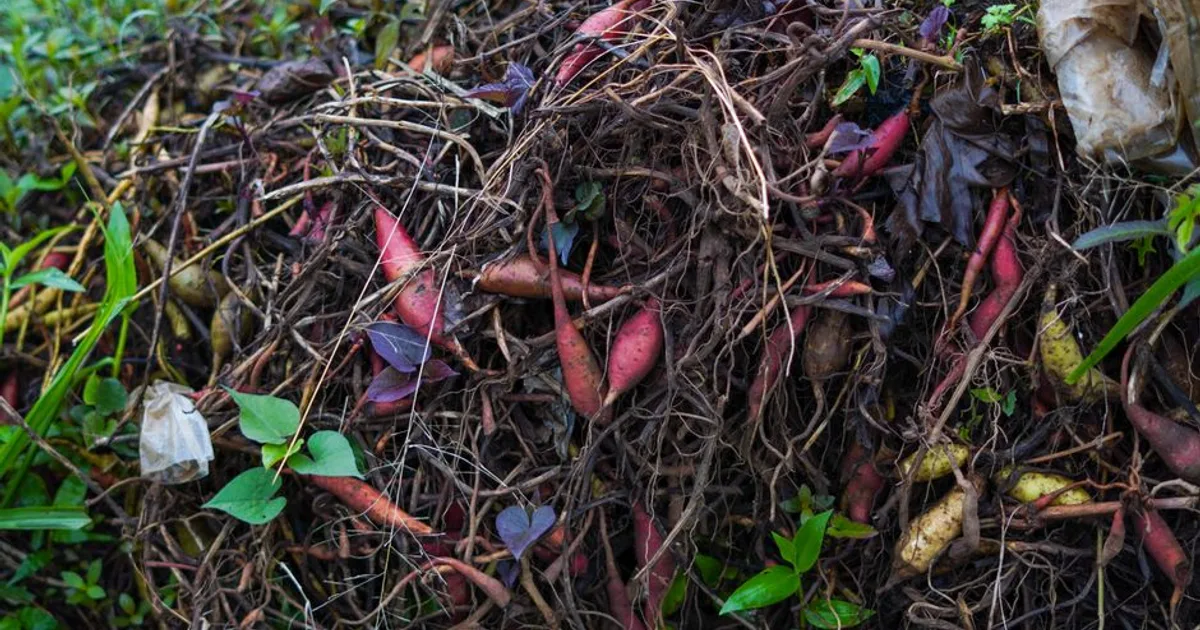
Don't add: meat, fish, dairy (rodents), diseased plants (the disease can survive and spread when you use the compost), perennial weed roots like bindweed or couch grass (they survive composting and spread when you use the heap), dog or cat faeces (pathogens), nappies, glossy paper.
Managing the heap
Once the bin is set up and you're adding material regularly, the main ongoing task is keeping it from going wrong.
Moisture: The heap should feel like a wrung-out sponge — damp but not dripping. In summer it can dry out, especially in a bin with a lid. Water it occasionally. In wet winters it can get waterlogged — cover the top with a piece of cardboard or an old piece of carpet to shed some rain. The same mulch layer helps garden beds retain moisture when you're away on holiday and can't water daily.
Air: Microorganisms need oxygen. A heap that's too compacted or too wet becomes anaerobic and smells. The simplest fix is turning — putting a garden fork in and moving the material around every few weeks. This introduces air and also moves cooler outer material to the warmer centre where decomposition is more active. You don't have to turn it frequently — every month or so is plenty for cold composting. If you never turn it, it will still compost, just more slowly.
A simple alternative to turning: when you add new material, push it into the heap rather than just laying it on top. This disturbs the existing material and introduces some air without a full turning session.
Smell: A well-managed compost heap should smell earthy, not unpleasant. Bad smells almost always indicate too many greens and not enough browns, or the heap is too wet. Add torn cardboard or dry leaves and fork it through. The smell should improve within a few days.
Hot composting vs cold composting
Cold composting — adding material gradually over months, turning occasionally, leaving it to break down in its own time — is what most home gardeners do. It produces good compost. It takes longer, typically six months to a year. It doesn't kill weed seeds reliably.
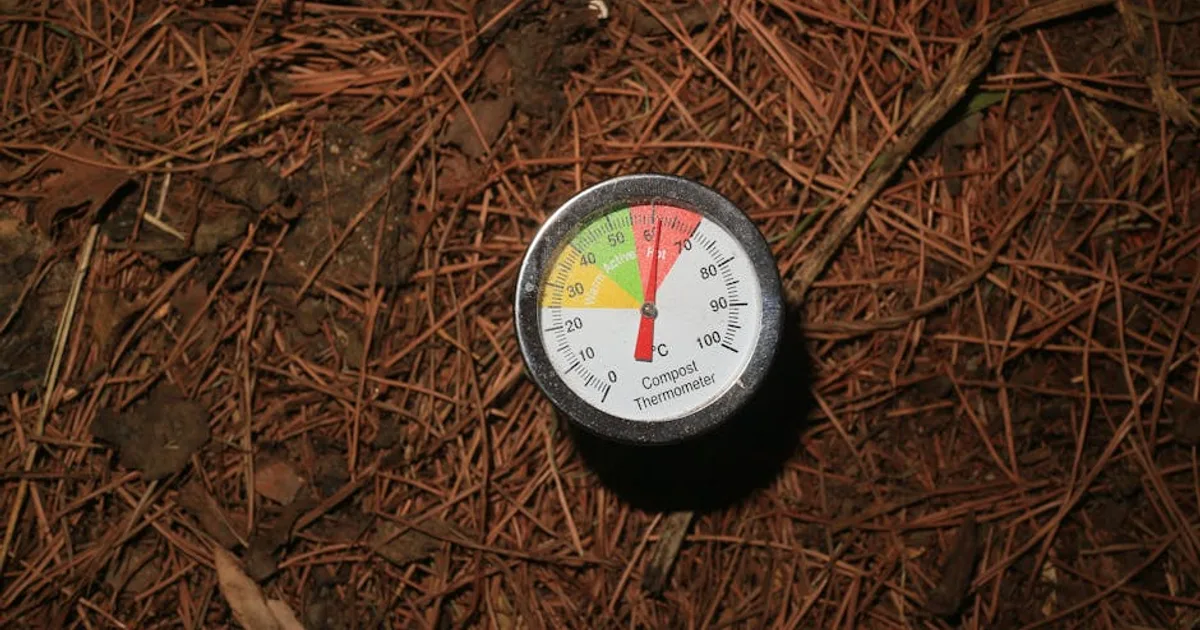
Hot composting is more active management. You build the heap in one go with a deliberate mix of greens and browns, the mass of material generates heat (a well-built hot heap reaches 60°C in the centre), and the heat accelerates decomposition and kills weed seeds and pathogens. A hot heap can produce usable compost in 8–12 weeks. It requires more material at once and more regular turning.
For most home gardeners, cold composting is perfectly adequate and requires much less effort. Hot composting is worth learning if you produce large amounts of garden waste or want to compost weeds and diseased material safely.
Knowing when it's ready
Finished compost is dark brown to black, crumbly, and smells like earth — not like the materials that went in. You shouldn't be able to recognise the original ingredients. If you can still see recognisable vegetable peelings or bits of cardboard, it needs more time.
In practice, home compost is often partially finished — some material is ready, some isn't. The standard approach is to use a sieve and put the unfinished material back into the heap. The larger particles that don't pass through the sieve continue composting while the fine, ready material goes onto the garden.
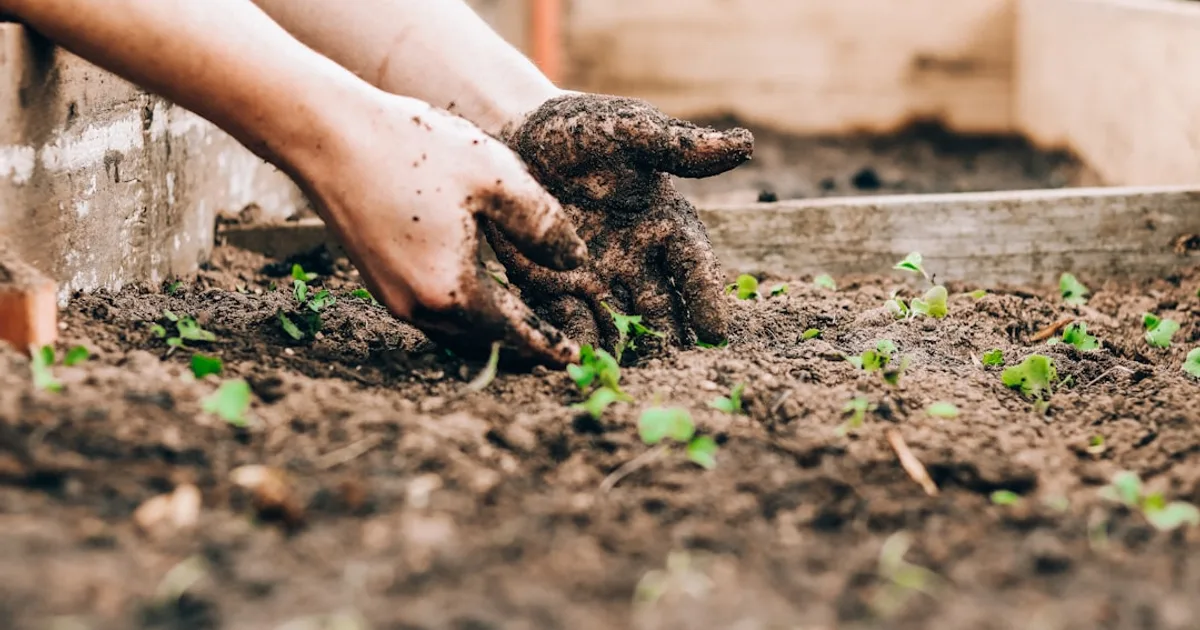
The best time to add compost to garden beds is autumn — it can be dug in or left on the surface as a mulch and will continue breaking down over winter, improving soil structure ahead of spring planting. That same compost goes into the hole when you transplant tomatoes in late spring. A 5cm layer across beds once a year makes a measurable difference to soil health over time.
If it goes wrong
Slimy and smelly: Too many greens, too wet, not enough air. Add cardboard and dry leaves, fork it through.
Dry and not breaking down: Too many browns, too dry. Add green material and water it.
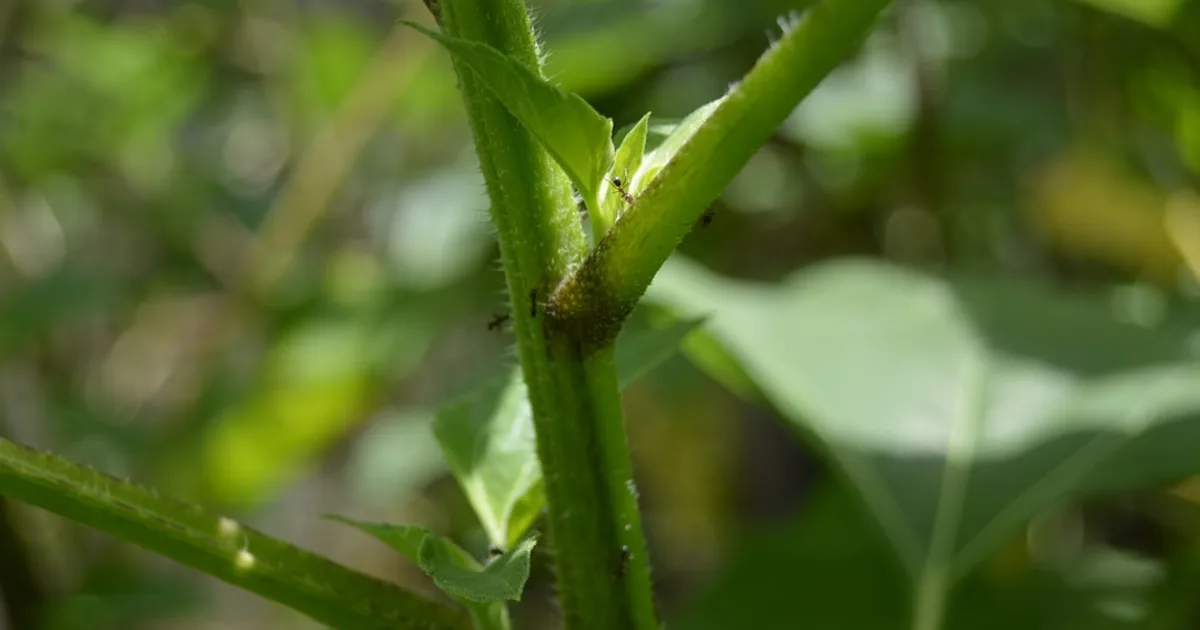
Ants nesting in it: The heap is too dry. Water it and fork it over.
Flies: You're adding cooked food or meat, or kitchen scraps are sitting exposed on top. Bury fresh additions in the heap rather than leaving them on the surface. A properly managed heap with only raw plant material and covered additions shouldn't have a significant fly problem.
Nothing seems to be happening: Either the heap is too cold (small heaps in winter barely decompose), too dry, or missing nitrogen. Add fresh grass clippings or coffee grounds to get things moving again.
Composting rewards consistency over perfection. Add material regularly, keep the balance roughly right, and check on it occasionally. After a year of doing almost nothing, you'll have something genuinely valuable to put back into the garden — and one less reason to buy bagged soil, which is a small but real way to save money every month.