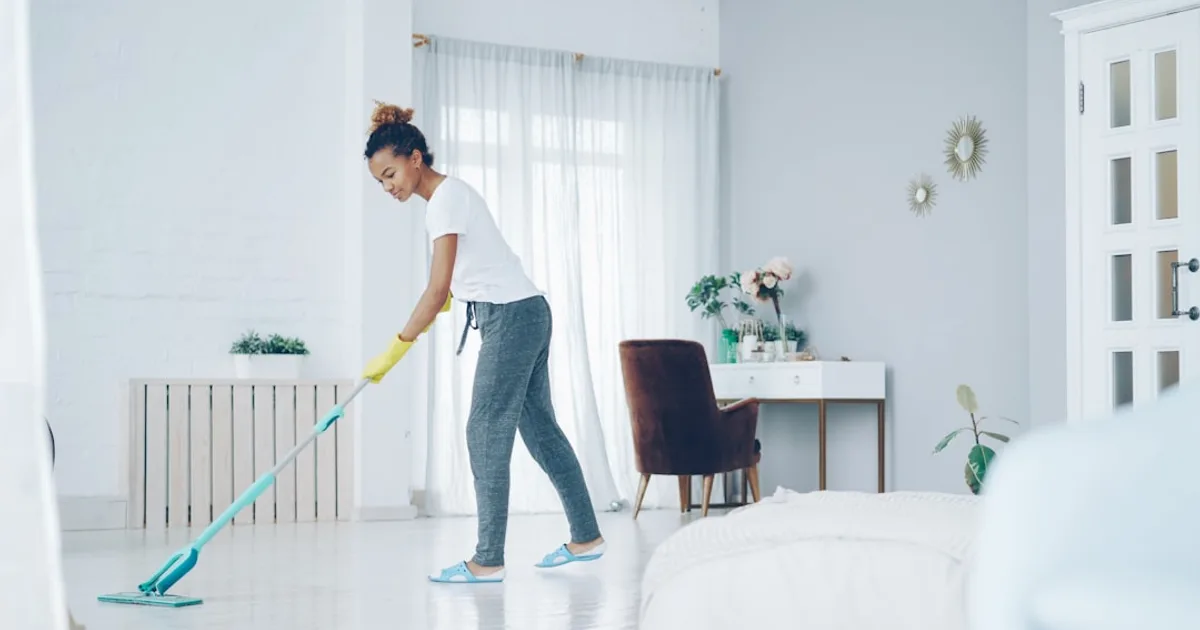
Cleaning slowly is mostly a habit. The same apartment that takes two hours when you drift from room to room, get distracted, and clean things in random order takes thirty minutes when you work with a system. The difference isn't effort — it's sequence and focus.
This is the sequence.
Before you start: two minutes of setup
Carry a laundry basket and a bin bag into the first room. The basket is for anything that belongs somewhere else — clothes on chairs, mugs in the bedroom, items that have migrated from where they live. The bin bag is for rubbish. You'll empty both at the end, not as you go.
Doing this first means you're not making three trips to the kitchen with stray mugs or interrupting your momentum to throw things away. Everything gets collected, then dealt with.
Set a timer. This is not a metaphor. An actual timer creates urgency that doesn't exist when you're cleaning open-endedly. The task expands to fill the time available — constrain the time and the task shrinks to fit.
The order that saves time
Work top to bottom, back to front, in a circuit. Top to bottom because dust and debris fall downward — if you clean the floor first and then dust the shelves, you clean the floor twice. Back to front because you're pushing dirt toward the door and you don't walk back through what you've already cleaned.
Room one: bedroom (7 minutes)
Make the bed first. This is the highest-impact action in the bedroom — a made bed makes the entire room look substantially tidier regardless of anything else. Tuck, straighten, done.
Collect everything that doesn't belong in this room into the basket. Dirty clothes from the floor or chair go directly into the laundry. Clear the surfaces — bedside table, dresser, anything that has accumulated clutter. Flat surfaces cleared of objects immediately make a room look cleaner. You're not organising — you're relocating things to their correct rooms.
Quick dust of visible surfaces with a damp cloth or microfibre cloth if anything is obviously dusty. Vacuum or sweep the floor last.
Room two: bathroom (7 minutes)
Spray the toilet, sink, and shower or bath with cleaning product and leave it to work while you do other things. This is the time-saving insight most people miss — they spray and immediately wipe, which requires significantly more scrubbing than letting the product sit for a few minutes and then wiping.
While it sits: clear the counter, put away anything out of place, replace the hand towel if needed. Now wipe the toilet (seat, bowl, base), sink, and shower surfaces. The product has done most of the work. Wipe the mirror. Done.
Room three: living room (8 minutes)
Collect everything that doesn't belong — into the basket or bin bag as appropriate. Clear surfaces. Straighten cushions. The principle is the same as the bedroom: clutter collected, surfaces visible.
Quick vacuum of the sofa if needed. Dust visible surfaces. Vacuum or sweep the floor.
Room four: kitchen (8 minutes)
Dishes — if there are dishes in the sink, either wash them quickly or load them into the dishwasher and run it. A sink with no dishes in it makes a kitchen look clean regardless of everything else.
Wipe down countertops. Clear anything that doesn't belong. Wipe the hob if it has visible splatter. Clean the sink last — it gets dirty again as you clean everything else.
Quick sweep or mop of the floor. Done.
The final two minutes
Empty the bin bag into the main household bin. Take the laundry basket back through the flat and put things where they belong — or at least leave the basket in the bedroom if you're out of time.
If you have guests arriving, the bathroom and living room matter most. People spend more time in both than in any other room and form disproportionate impressions based on them. If you only have fifteen minutes, do those two rooms thoroughly and close the bedroom door.
What to skip
Deep cleaning is not speed cleaning. In thirty minutes you are not descaling the kettle, cleaning the oven, reorganising cupboards, or washing windows. These things matter but they're separate tasks for separate sessions. Attempting them in a speed clean derails the sequence and leaves the visible-at-a-glance things — surfaces, floors, bathroom — undone.
Skip anything that doesn't affect the visual impression of the space. Cleaning behind the sofa, sorting the medicine cabinet, organising the pantry — legitimate tasks, wrong session.
What makes this possible long-term
Thirty minutes works consistently if the baseline level of disorder is manageable. A flat that accumulates a week's worth of clutter without any maintenance takes longer to clean than one that gets five minutes of daily tidying habits — dishes dealt with, surfaces cleared, things put away before bed. Building those small daily habits is its own skill, covered in our guide to building good habits that stick.
The thirty-minute clean is the reset. Daily five-minute habits — and a consistent wind-down before sleep — are what keep the reset from becoming a two-hour project. Both matter, and they work together rather than being alternatives.
The sequence, the timer, and the discipline to clean only what needs cleaning in the time available — that's all there is to it.