A planner bought in January, used diligently for three weeks, and then abandoned with half its pages blank is one of the most common artifacts of good intentions. The planner itself was rarely the problem. The way it was being used was.
Most abandoned planners fail for the same reason: they were treated as a record of what should happen rather than a tool for figuring out what actually will. The version that works looks less tidy and gets used a lot longer.
Pick a format that matches how you actually think, not how planners look
There are three broad planner structures, and most people buy the one that looks best in photos rather than the one that fits how they process time.
Time-blocked, hour-by-hour planners suit people whose days are genuinely structured around fixed appointments — meetings, calls, specific commitments at specific times. If your day doesn't actually look like that, an hourly grid creates pressure to assign tasks to specific hours that don't reflect how the work actually happens, and the gap between the plan and reality becomes discouraging fast.
Simple daily to-do planners, with space for a short list and maybe a few notes, suit people whose work is more task-based than time-based. The flexibility of "these things need to happen today, in whatever order makes sense" matches how a lot of actual days unfold.
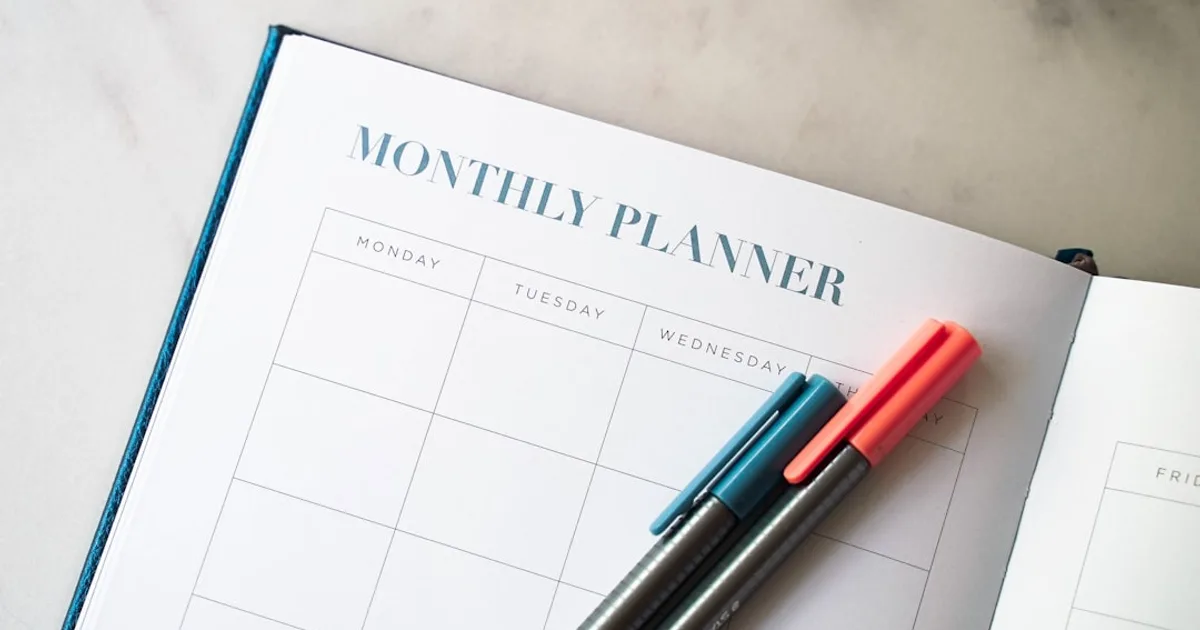
Weekly planners, showing the whole week at a glance with space under each day, suit people who think in terms of weekly priorities and want to see how a Tuesday commitment affects what's realistic for Wednesday. This format is often the best starting point for someone who isn't sure which structure fits them — whether on paper or in one of the free apps to organize your life with a weekly view — because it shows enough context to move tasks around without the granularity of an hourly grid.
If a planner is currently sitting unused, the format mismatch is worth considering before concluding that planning itself doesn't work for you.
Plan at the same time, every time
The single habit that determines whether a planner gets used consistently is when planning happens, not what the planner looks like. Planning needs an anchor — a consistent moment in the day or week where it happens automatically, rather than something you do "when you get a chance."
A short planning session at the end of each day, reviewing what happened and setting up tomorrow, takes five to ten minutes and means you start each morning with a plan already made rather than building one cold. A slightly longer session on Sunday evening or Monday morning, mapping the coming week's priorities and known commitments, gives the daily planning something to work from rather than starting from nothing every day.
The exact timing matters less than the consistency. A planning session anchored to an existing habit — after dinner, with morning coffee, right before closing the laptop — is far more durable than one that depends on remembering to do it.
Write less than feels complete
A common reason planners feel like a chore is that people try to capture everything — every small task, every passing thought, every contingency — which turns planning into a long, effortful activity rather than a quick, useful one.
A workable daily plan usually has somewhere between three and six genuinely important items, not fifteen. Long lists feel productive to write and are demoralizing to look at, because most of what's on them won't get done in a single day — the same pattern behind productive procrastination — and an unfinished long list reads as failure even on a day where real progress happened.
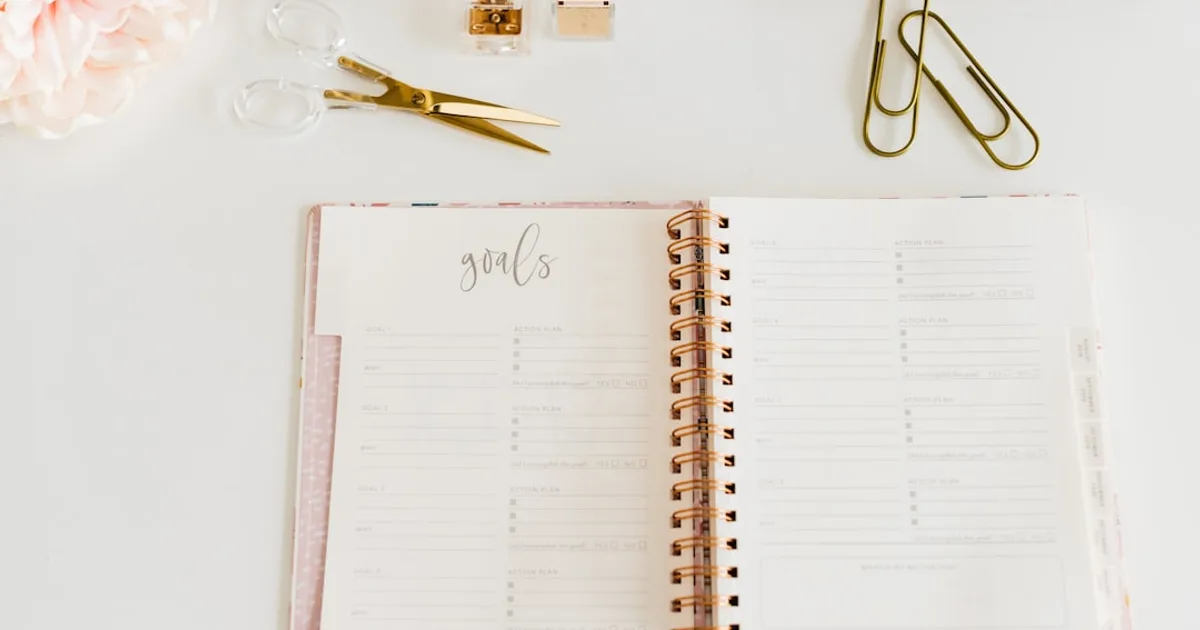
Separate the few things that actually matter today from the longer list of things that exist somewhere in the back of your mind. The longer list can live elsewhere — a running notes page, a separate brain dump section — and items move from it into the daily plan only when they're genuinely going to be worked on.
Build in space for what doesn't go to plan
A planner that has no room for the unexpected becomes inaccurate within the first few days and then feels pointless to maintain. Most days include something unplanned — an urgent email, a delay, a conversation that takes longer than expected — and a planning system that doesn't account for this gets abandoned the first time reality diverges from the page.
Leaving deliberate buffer time, or simply not scheduling every available hour, makes a planner resilient to the inevitable disruptions rather than constantly "wrong." Some people find it useful to plan only 70–80% of available time, leaving the rest open for whatever comes up. The plan stays useful even on a day that doesn't go as expected, rather than needing to be rewritten by 10am.
Review, don't just plan forward
Most of the value of a planner comes from looking backward as much as forward. A quick weekly review — what actually got done, what consistently doesn't, what kept getting pushed to the next day — reveals patterns that planning forward alone never surfaces.
If the same task has moved to tomorrow's list five days running, that's information. It might mean the task is bigger than it looks and needs to be broken down, or it might mean you're avoiding it for emotional reasons rather than that it's genuinely low priority. A planner used only to plan ahead misses this kind of pattern. A planner that's reviewed periodically surfaces it clearly.
Let it be imperfect
A planner with crossed-out items, moved tasks, and days that didn't go as written is a planner that's actually being used. A pristine planner, filled in neatly with every box completed exactly as planned, is either documenting an unusually easy stretch of life or — more often — has stopped reflecting reality and is being maintained as a performance rather than a tool.
The psychological hurdle that causes most people to abandon planners is the discomfort of an imperfect page — a day that didn't go as planned, crossed-out items, gaps. Getting past this requires treating the planner as a working document rather than something that needs to look good. The version that's a little messy and still being used every day is doing its job far better than the one sitting untouched because the owner didn't want to "ruin" a clean page.
What planners can't fix
A planner organizes intention. It doesn't manufacture motivation, and it doesn't make an unreasonable workload reasonable. If a planner consistently shows more committed time than actually exists in a day, the problem isn't the planning system — it's that there's more on the list than is realistically achievable, and no format of planner resolves that by itself. Pairing a planner with the two-minute starting technique helps when the list is right but starting still feels hard.
For most people, the planner that gets used for years rather than abandoned by February is the simplest one that matches how they naturally think, used at a consistent time, holding a short list rather than an exhaustive one, with room left for things not going to plan. The elaborate systems with colour codes, multiple sections, and detailed tracking work for some people and become one more thing to maintain for most others. Start simple. Add structure only when the simple version genuinely runs out of room.