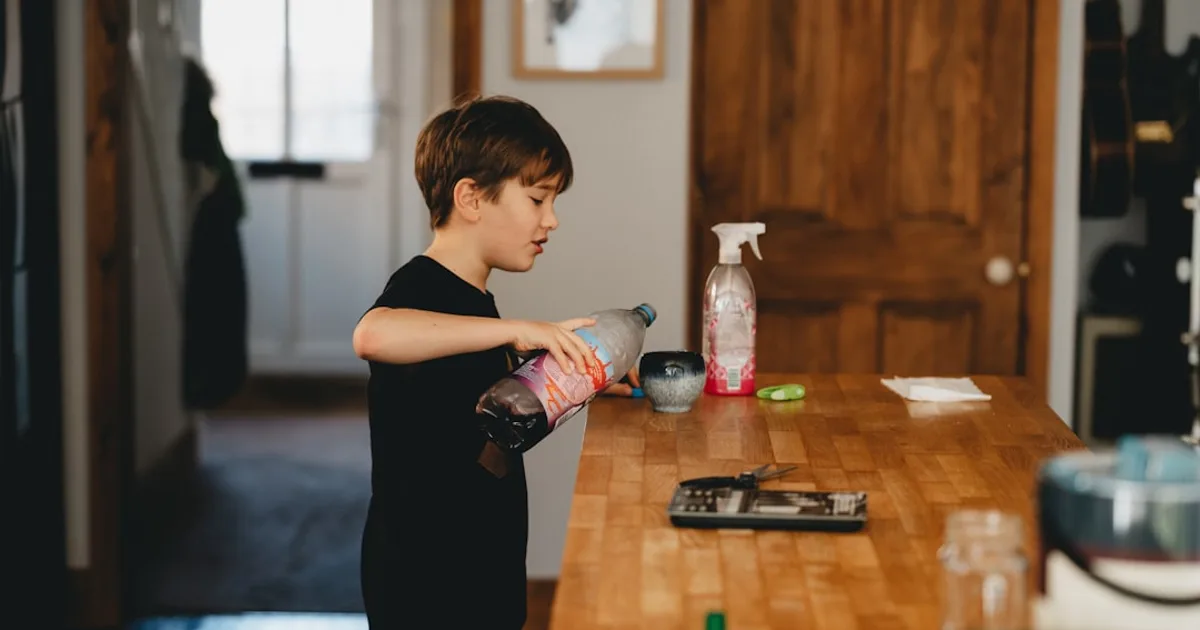
The chore chart bought with enthusiasm in January and abandoned by March is one of the most common artifacts of family life. The system looked good on paper — stickers, rewards, a clear structure — and collapsed within weeks because it was built around compliance rather than capability. Kids resisted, parents got tired of enforcing it, and the chart ended up in a drawer.
The chore systems that actually last are built differently. They start with genuine capability rather than aspiration, they separate chores from payment in most cases, and they accept that the first several months of any new chore are slower and messier than doing it yourself.
Age-appropriate expectations
Chores fail most often because the task doesn't match the child's actual developmental capability. A three-year-old cannot reliably make a bed to any standard that resembles "made." Expecting it produces frustration for everyone.
Ages 2–3: Put toys in a bin, put dirty clothes in a hamper, wipe up small spills with help, carry their own plate to the kitchen (unbreakable, with supervision). These aren't really chores in the productive sense — they're the beginning of the habit of contributing.
Ages 4–5: Make their bed (imperfectly — that's fine), set the table with non-breakable items, water plants, feed a pet with supervision, put away their own laundry into drawers, tidy their toys without being asked twice — the same kinds of hands-on tasks that developmental games for ages 3–5 build toward through play.
Ages 6–8: Fully make their bed, sort laundry, help prepare simple parts of meals (washing vegetables, stirring), take out small rubbish, sweep, help unload the dishwasher (placing items they can reach safely), care for a pet's basic needs independently.
Ages 9–12: Do their own laundry start to finish, vacuum, clean a bathroom with guidance, help cook full simple meals, mow a lawn with supervision, manage their own homework schedule as a parallel responsibility.
Teenagers: Full independent management of their own space and laundry, meaningful contribution to household cooking, more complex cleaning tasks, potentially babysitting younger siblings, budgeting for their own discretionary spending if linked to any paid work — expectations that land more smoothly when you've already learned to talk to teenagers without arguments.
The expectation should sit at the edge of current capability — challenging enough to be a genuine contribution, not so far beyond it that failure is guaranteed.
Teach before you expect
The chore that gets resisted hardest is usually the one that was assigned without being taught. A child told to "clean your room" without ever having been shown what that actually means — where things go, what order to do things in, what "clean" looks like — is being set up to fail and then blamed for failing.
Teach explicitly, the first several times. Do the task alongside them, narrating what you're doing and why. "I'm putting the books back in order of size because it's easier to find them later" is more useful than just doing it silently while they watch.
This investment of time up front — actually teaching the skill rather than assuming it's obvious — is what separates households where chores eventually run smoothly from ones locked in permanent conflict about standards nobody ever explained, the same patient repetition that makes a sleep routine for children stick.
Should chores be paid?
This is genuinely debated among parenting researchers and the honest answer is: it depends what you're trying to teach, and a combination often works better than an absolute position.
The case against paying for chores: household contribution is framed as something everyone does because they're part of a family, not a transaction. Tasks like making your own bed, putting away your own things, and basic tidying are personal responsibility rather than paid labour. Paying for everything risks a child who won't do anything without payment, including things that are simply expected of any family member.
The case for paying for some chores: it teaches the connection between effort and money, which is valuable financial education — the same lesson you'd reinforce when you explain money to kids through real decisions rather than lectures. Additional tasks beyond baseline responsibility — washing the car, significant yard work, tasks that genuinely go beyond what's expected — are reasonable to pay for, similar to how an employer pays for work beyond a basic role.
A workable middle ground: baseline contribution (their own space, their own things, basic family tasks like setting the table) is unpaid and simply expected. Additional, optional tasks beyond that baseline can be paid. This teaches both responsibility and the value of additional effort without conflating the two.
Consistency over elaborate systems
The most reliable predictor of whether a chore system survives past the first month is not the system's sophistication — it's whether the same expectations are enforced consistently by both parents, every day, without negotiation.
A chore that's enforced strictly on Monday and forgotten on Tuesday teaches a child that the rules are negotiable, which makes every future instance a negotiation. A chore enforced consistently, even imperfectly, becomes a habit faster than an elaborate sticker chart system that's applied inconsistently.
Simple, visible structure helps — a basic chart on the fridge showing what's expected each day, not because the chart itself is magic but because it removes ambiguity and the daily argument about whether something was actually agreed, much as a planner used effectively removes the friction of deciding what comes next.
What to do when they refuse
Refusal is normal and doesn't mean the system has failed. The response that works best is calm, consistent, and connects the chore to natural consequences rather than punishment.
If laundry isn't done, the natural consequence is not having clean clothes for something they wanted to wear — not a lecture, not a punishment unrelated to the task, just the direct result of the chore not being completed. If a room isn't tidied, time for a preferred activity is delayed until it is, framed as "this needs to happen before that" rather than as a battle.
Avoid doing the chore for them when they refuse, even though it's often faster. Completing a child's chore when they resist teaches that resistance works. It's slower and more frustrating in the moment to hold the line. It's faster over the following months because the lesson — chores happen regardless of resistance — gets learned once rather than needing to be relearned constantly.
The standard you should actually expect
A child's version of "clean" will not match an adult's for years, and expecting adult-level standards from a child guarantees ongoing conflict and discouragement. A six-year-old's bed-making will have visible wrinkles. Accept it, or you're teaching that effort isn't good enough regardless of what's actually achievable.
Praise effort and completion specifically rather than perfection. "You got your room tidy" rather than silently redoing it after they've gone to bed because it wasn't quite right. Redoing a child's chore after the fact — even with good intentions — communicates that their effort wasn't sufficient and undermines the whole point of having them do it.
The long view

Kids who grow up doing genuine, age-appropriate household contribution develop practical competence, an understanding that households require shared effort, and — research on this is fairly consistent — better outcomes in adult relationships and work environments than kids who were never expected to contribute meaningfully.
The mess and slowness of a child learning to do a task properly is temporary. The capability and habit, once built, last. The investment is front-loaded; the payoff compounds for years.