Kittens have a strong natural instinct to bury their waste. This instinct is already present at three to four weeks old and it works in your favour — litter training a kitten is less about teaching a new behaviour and more about providing the right conditions for an existing instinct to express itself correctly.
Most litter training failures aren't failures of the kitten. They're failures of setup — the same kind of environmental mismatch that derails a child's sleep routine when the signals aren't consistent. The box is in the wrong place, the litter feels wrong, there's only one box for multiple cats, or the box isn't being cleaned frequently enough for an animal whose sense of smell is fourteen times more sensitive than yours. Fix the setup and most kittens train themselves within a few days.
Before the kitten arrives: getting the setup right
The litter box size is where most people start wrong. Kittens are small, which leads people to buy small boxes. Small boxes are uncomfortable, limit movement, and get dirty faster. The rule is a box at least one and a half times the length of the cat — for a kitten this means buying for the adult size they'll become. A large, open tray works better than a small covered box for most cats.
Covered boxes feel private to humans and feel like traps to cats. They concentrate odour inside rather than dispersing it, which cats find unpleasant even when the box appears clean to human noses. If you want a covered box for aesthetic reasons, leave the door off initially and let the kitten decide whether they use it.
Litter choice matters more than most guides acknowledge. Unscented, fine-grain clumping litter is the preference of the majority of cats. The fragrance added to many commercial litters is there for human benefit and actively deters many cats — a classic pet-store impulse purchase that looks appealing on the shelf and fails in the box. Cats also prefer fine texture — similar to soil or sand — over coarse granules or pellets. If you've bought a strongly scented or pellet-style litter and the kitten avoids the box, this is likely why.
Location: quiet, accessible, away from food and water. Cats do not eat near where they eliminate — placing the litter box near the food bowls is the single most common setup mistake. A bathroom, a utility room, a quiet corner — anywhere that's consistently accessible and not trafficked by loud activity. One box per floor of the house if you have multiple floors. One box per cat plus one extra if you have multiple cats.
Days one and two: introduction and reinforcement
Bring the kitten home and take them directly to the litter box before anything else. Place them gently inside and let them sniff and investigate. Don't force them to scratch or demonstrate — just let them explore it and step out on their own terms.
For the first 48 hours, watch for pre-elimination behaviour: sniffing the floor, circling, crouching, scratching at carpet or flooring. When you see any of these, pick the kitten up immediately and place them in the litter box. Stay nearby but don't hover directly over them — give enough space that they don't feel watched.
When they use the box, acknowledge it calmly. You don't need to make a production of it. A quiet "good" or a brief fuss immediately after they exit the box is enough. The goal is a positive association, not a performance.
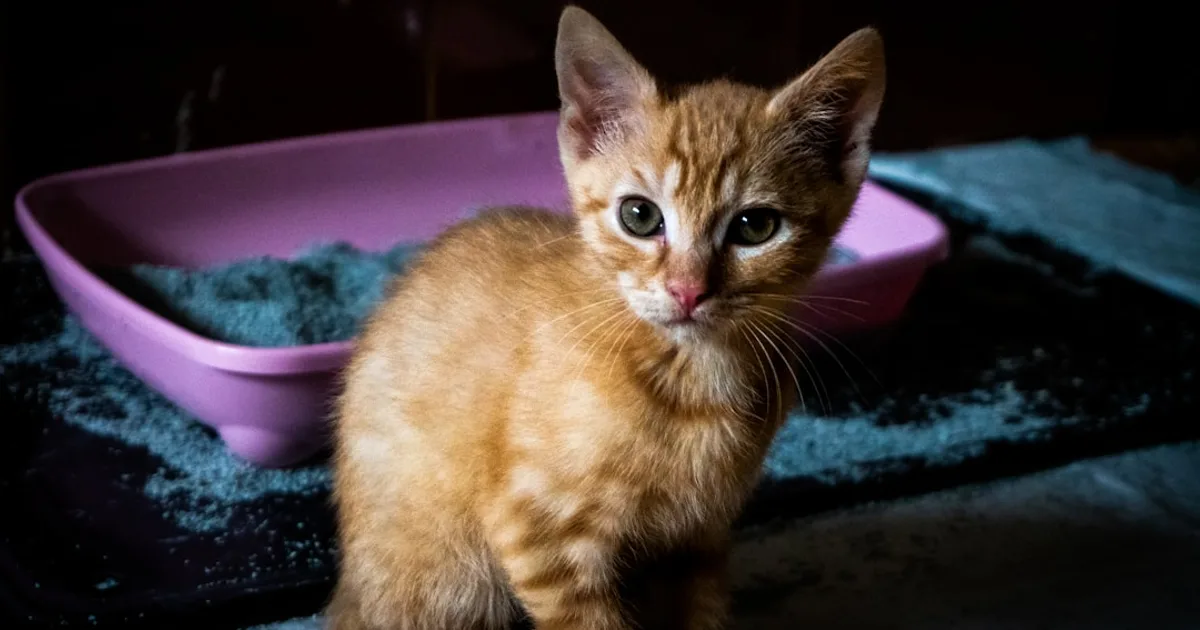
Keep the kitten in a smaller space initially — one room, or a section of the house — so the litter box is always nearby and they can't get too far from it when the urge arrives. Families with preschoolers should supervise early interactions closely and let the kitten settle before expecting calm coexistence. Gradually expanding their territory over the first week reduces accidents significantly.
After eating and after waking from naps are the two times kittens most reliably need to eliminate. Making a habit of placing them near the litter box at these times for the first few days intercepts most accidents before they happen.
Day three and beyond: troubleshooting
By day three, most kittens are using the box independently. If they're not, something in the setup needs changing before concluding there's a behavioural problem.
Accidents in a specific spot: The kitten has decided this location is preferable to the box. Clean the spot thoroughly with an enzymatic cleaner — standard household cleaners don't fully break down the compounds that attract a cat back to the same spot. Then make the location less appealing: place a piece of aluminium foil, a plastic mat turned upside down, or their food bowl there. Simultaneously, move the litter box closer to that area or add an additional box nearby.
Going near the box but not in it: The litter itself is probably the issue. Try a different, unscented fine-grain clumping litter. Some cats have strong texture preferences and simply won't use a litter that feels wrong underfoot regardless of how clean it is.
Using the box intermittently but not reliably: The box isn't being cleaned frequently enough. Kittens are particularly sensitive to a soiled box. Scoop at minimum once daily — twice is better. Fully empty and wash the box with mild soap (not bleach or strongly scented cleaners) weekly.
Avoiding the box entirely after previously using it: Something changed. Either the box location has become less accessible, the litter was changed, or the box isn't clean enough. Occasionally, a negative experience near the box — a loud noise, being startled — creates an aversion that requires moving the box to a new location to reset the association.
What kittens younger than eight weeks need
Very young kittens — under six weeks — cannot eliminate independently. Their mother stimulates them by licking. If you're caring for an orphaned kitten this age, you'll need to stimulate elimination yourself after each feeding using a warm, damp cotton pad applied gently to the genital area. This continues until the kitten can eliminate on their own at around four weeks, at which point you introduce a shallow tray with a small amount of fine litter.
Most people acquiring kittens from breeders or shelters are getting kittens of eight weeks or older, which is past this stage. But it's worth knowing if you find an abandoned kitten younger than this.
The accidents will happen
Even with perfect setup, a kitten is going to have accidents in the first week. The response matters. Cleaning up thoroughly with an enzymatic cleaner — the same thorough approach as a quick whole-apartment clean when mess spreads beyond one spot — not scolding, not putting the kitten's face near the accident — is all that's needed. Cats do not connect punishment after the fact with the behaviour that caused it — much like teenagers, who respond better to calm repair than lectures, as anyone who's tried to talk to a teenager without arguments already knows. The only outcome of scolding is a cat that becomes anxious around you.
Three days is achievable for most kittens in a correctly set up environment. Some take a little longer. The adjustment period is measured in days, not weeks, when the conditions are right — and for most kittens, given the right box in the right place with the right litter kept sufficiently clean, the instinct does the work for you.