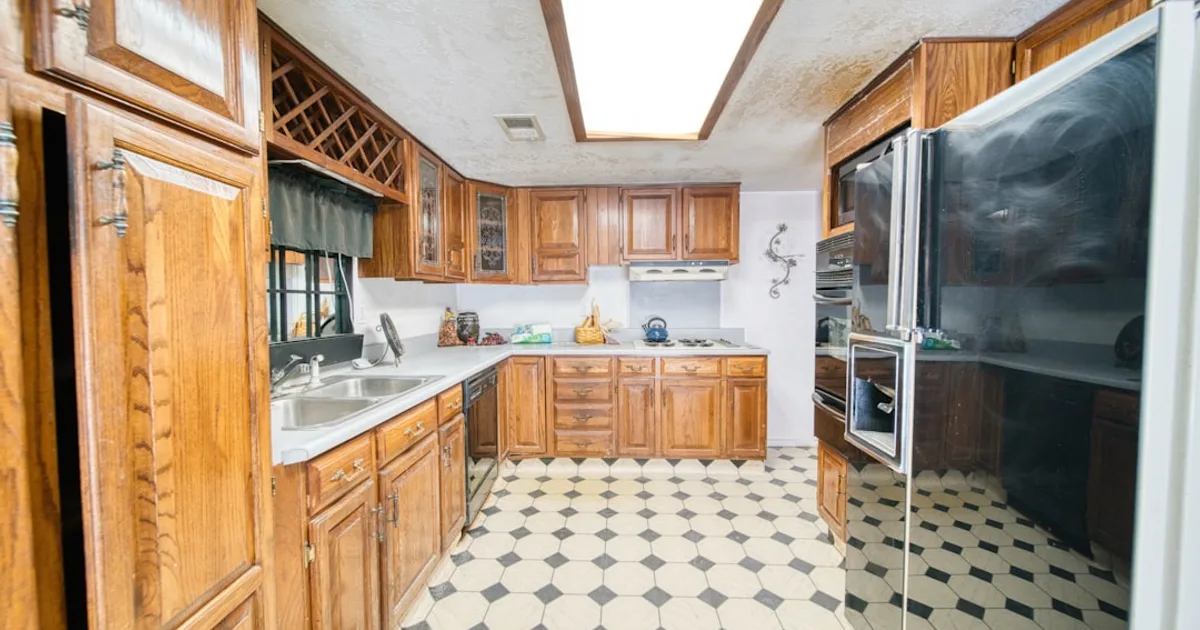
Walk into any flooring showroom and ask which is better — laminate or tile for a kitchen — and you'll get a sales pitch, not an answer. Showrooms are designed to trigger impulse decisions as much as to inform them. The honest answer is that it depends on factors most people don't think about until after they've already made the decision and are living with the consequences.
This comparison is based on what actually matters in a working kitchen: how the floor holds up to water, how it feels after you've been standing on it for two hours, what happens when something goes wrong, and what the real costs look like once you factor in installation.
The water question — and why it's more complicated than you think
Everyone knows tile handles water better than laminate. That's true, but the full picture is more nuanced.
Porcelain tile — not ceramic, porcelain — is essentially impervious to water. You can flood it, mop it twice a day, and it won't absorb a thing. Ceramic is close, but slightly more porous at the unglazed edges and base. In a kitchen, that difference rarely matters unless you have a genuine flooding event.
Laminate is more complicated. Standard laminate is genuinely vulnerable — water that gets into the seams swells the core board and the damage is permanent. But the category has evolved significantly. Water-resistant laminate uses a sealed HDF core and treated edges that can handle spills and splashes without immediate damage. Fully waterproof laminate (sometimes called WPC or SPC flooring) goes further and can handle standing water for extended periods.
The problem is that people buy "water-resistant" laminate thinking it's the same as waterproof — and then leave a puddle under the dishwasher unnoticed for a week. Knowing how to fix a leaking pipe fast limits the damage either way, but tile forgives slow leaks far better than laminate. Tile doesn't care. Laminate, even good laminate, has limits.
Bottom line: If your kitchen is prone to serious spills, you have young kids, or you've had appliance leaks before — tile is the safer choice. If you're disciplined about wiping spills quickly and you invest in a quality WPC laminate, the gap is much smaller than it used to be.
Durability: what the specs don't tell you
Tile lifespan figures — 20, 30, 50 years — assume perfect installation on a perfectly level subfloor. In reality, tile cracks. Not always, not quickly, but it happens. A subfloor that flexes slightly, a heavy object dropped at the wrong angle, a settling foundation — any of these can crack a tile. The good news is that individual tiles can be replaced. The bad news is that replacement tiles often don't match the original perfectly, especially after a few years of sun exposure affecting the color.
Laminate wears differently. The surface layer is rated by AC class (AC3 for residential light use up to AC5 for heavy commercial use — in a kitchen you want AC4 minimum). Scratches accumulate over time, particularly in front of the sink and along high-traffic paths. Unlike tile, you can't replace a single plank invisibly — the color match is nearly impossible unless you kept offcuts from the original installation, which almost nobody does.
Both materials have real durability. Tile wins on raw longevity when installed correctly. Laminate is more forgiving of imperfect subfloors but shows its age more visibly over time.
Standing comfort: the factor nobody talks about enough
Spend three hours cooking a Sunday roast, baking bread, and doing the washing up. Do that on tile and then do it on laminate. The difference is significant enough that it genuinely affects how you feel about your kitchen.
Tile is hard. Not just hard to the touch — hard in the way that transfers through your feet, ankles, knees and lower back over extended standing. In cold weather, tile is also cold underfoot in a way that laminate simply isn't. Underfloor heating solves both problems but adds meaningful cost and requires professional installation.
Laminate has natural give. The foam underlayer absorbs some impact, the surface has slight flex, and the material itself holds some warmth. After a long day in the kitchen, this isn't a trivial difference.
If you cook seriously and spend a lot of time in your kitchen, comfort is worth factoring into this decision at least as heavily as water resistance.
The real cost comparison
Material costs are roughly comparable at the mid-range — both laminate and tile have cheap options and premium options, and the ranges overlap considerably. Where the gap appears is installation.
Laminate is a floating floor. It doesn't require adhesive, it clicks together, and a competent DIYer can lay a standard kitchen in a weekend. Even professional installation is relatively quick and therefore relatively affordable — typically $3–6 per square foot for labor.
Tile installation is a skilled trade. The subfloor needs to be level to within 3mm over 3 meters — if it isn't, you're looking at leveling compound before you even start. Then there's adhesive, spacers, grout, sealer, and the time it takes to let each stage cure. Professional installation typically runs $6–12 per square foot for labor, and mistakes are expensive to fix.
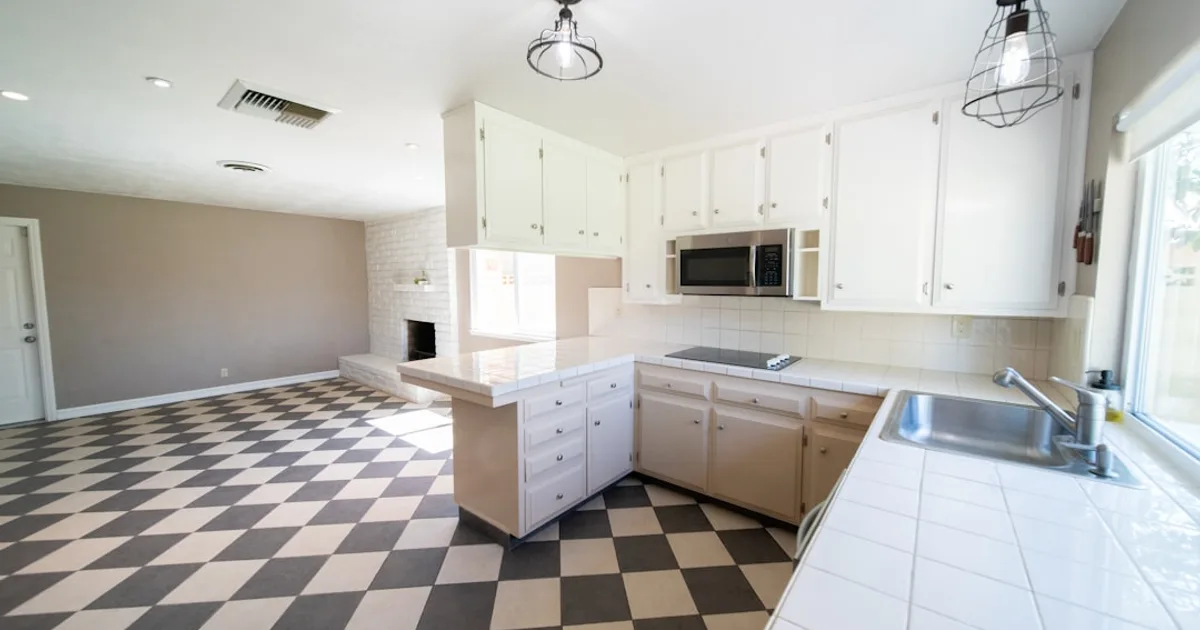
Then there's ongoing cost. Grout is the hidden maintenance item with tile that nobody mentions until they're on their hands and knees with a toothbrush six months after installation. Kitchen grout gets dirty. Grease, food particles, and moisture all find their way into it. Epoxy grout is more stain-resistant but harder to work with and more expensive. Dark grout hides dirt but makes cleaning harder to judge. Light grout shows everything.
Laminate has no grout. Cleaning is a sweep and a damp mop.
What happens when things go wrong
This is where tile has a genuine long-term advantage that's easy to overlook. When a tile cracks or chips, you replace that tile. One tile. The rest of the floor is untouched.
With laminate, localized damage is harder to address invisibly. If a plank gets severely water damaged or deeply scratched, you need to replace it — and that means either having kept original offcuts (rare) or hoping the product is still in production (not guaranteed after 5+ years). A full replacement of a laminated kitchen floor is a bigger project than replacing a cracked tile.
Appearance and what it does to your kitchen
Tile offers things laminate simply can't replicate: large format slabs that run seamlessly across a kitchen and into adjacent rooms, genuine stone looks that improve with age, handmade terracotta with real variation, cement tile with patterns that photograph beautifully. At the premium end, tile has a material authenticity that laminate — however convincing — doesn't quite match.
Laminate does wood convincingly. If you want a warm, timber-look kitchen floor without the maintenance of real wood, good laminate is genuinely impressive. It's also more forgiving with interior design — wood tones are more versatile across different kitchen styles than many tile options.
Both have enormous variety. Neither limits your design options in any meaningful way.
Resale and perceived value
Buyers notice flooring. In most markets, tile reads as a more premium finish than laminate, particularly in kitchens. This isn't always rational — a quality laminate can be more practical than cheap tile — but perception matters in real estate.
If you're renovating with resale in mind, tile is the safer investment — much like choosing living room paint colors that read as considered rather than trend-chasing. If you're renovating for yourself and plan to stay, this factor drops well down the priority list.
Making the actual decision
There's no universal right answer, but there are situations where one clearly outperforms the other.
Tile makes more sense when: you have a busy kitchen with children, you've had water damage issues before, you're renovating to sell, or you want a floor that can genuinely last 20+ years without significant visible wear. Budget for proper installation — badly laid tile is worse than well-laid laminate.
Laminate makes more sense when: you're working with a tight budget, you want a warm timber aesthetic, comfort underfoot is a real priority, you're doing the installation yourself, or you're in a rental or mid-term situation where you don't want to invest in a permanent solution.
One thing applies in both cases: buy better than you think you need to. The difference in price between mid-range and cheap is real. The difference in how both look and perform five years later is significant.